Private Label Packaging Design: How to Make a Range Look Like One Brand
Private label means your name on a product made for you. Six decisions that make a whole range read as one brand on the shelf, shown on a family of four snack pouches.
PackagingKavin StudiosUpdated 23 October 2026
Private label packaging has to do two jobs at once: make each product easy to tell apart, and make the whole range read as one brand. Decide one layout, give each product its colour, put the same facts in the same place, and test the system on a fifth product before you print.
1. Start with the shelf, not the pack
Private label means a product made for you by another maker and sold under your own name. It usually sits next to well-known brands, so the first question is not what your pack looks like but what it stands beside.
Look at the shelf you want to sell on. Note the colours, shapes and finishes of the packs around it. Your range can copy none of them, and it still has to be found in a second.
2. Build one system, then colour it for each product
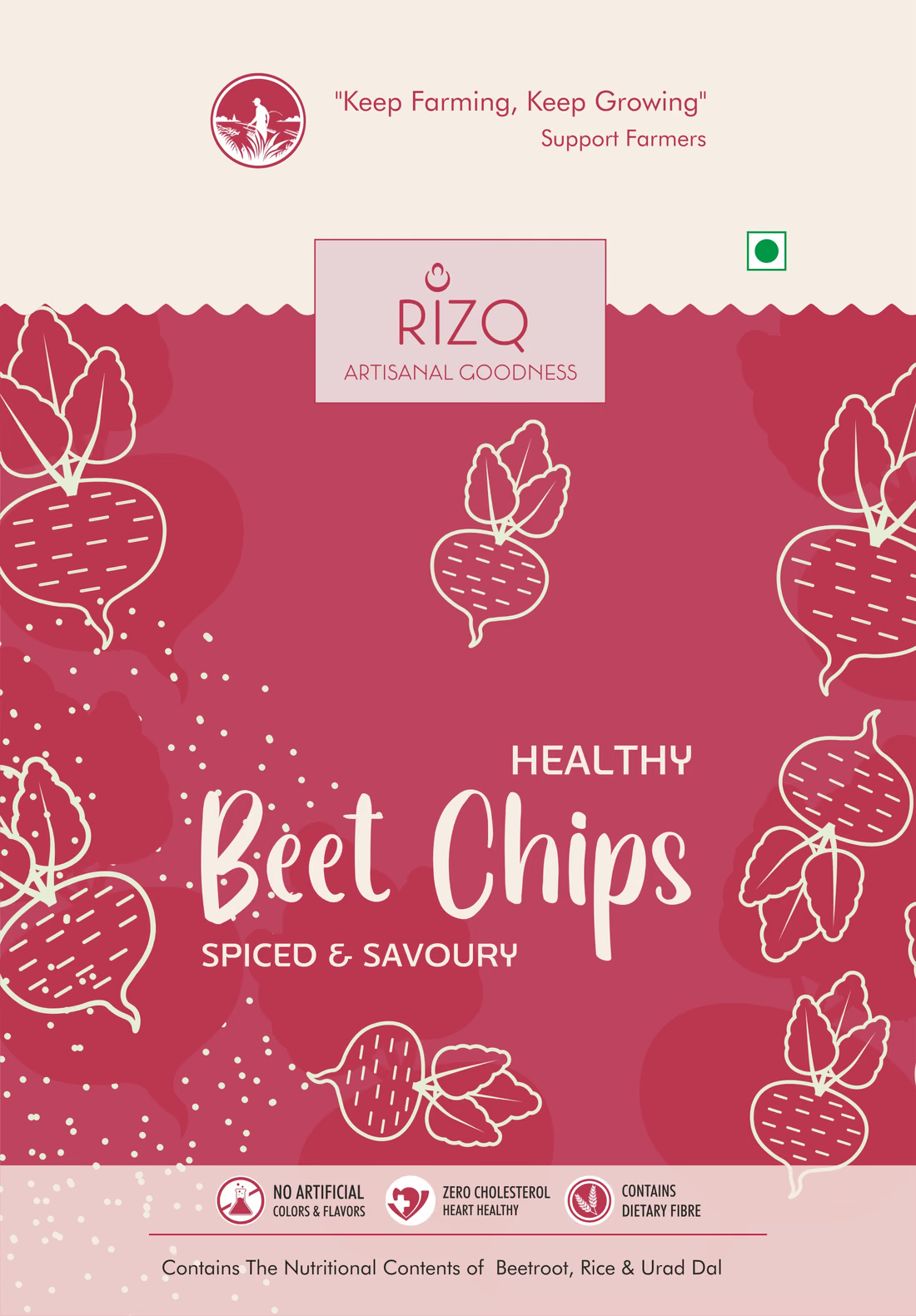
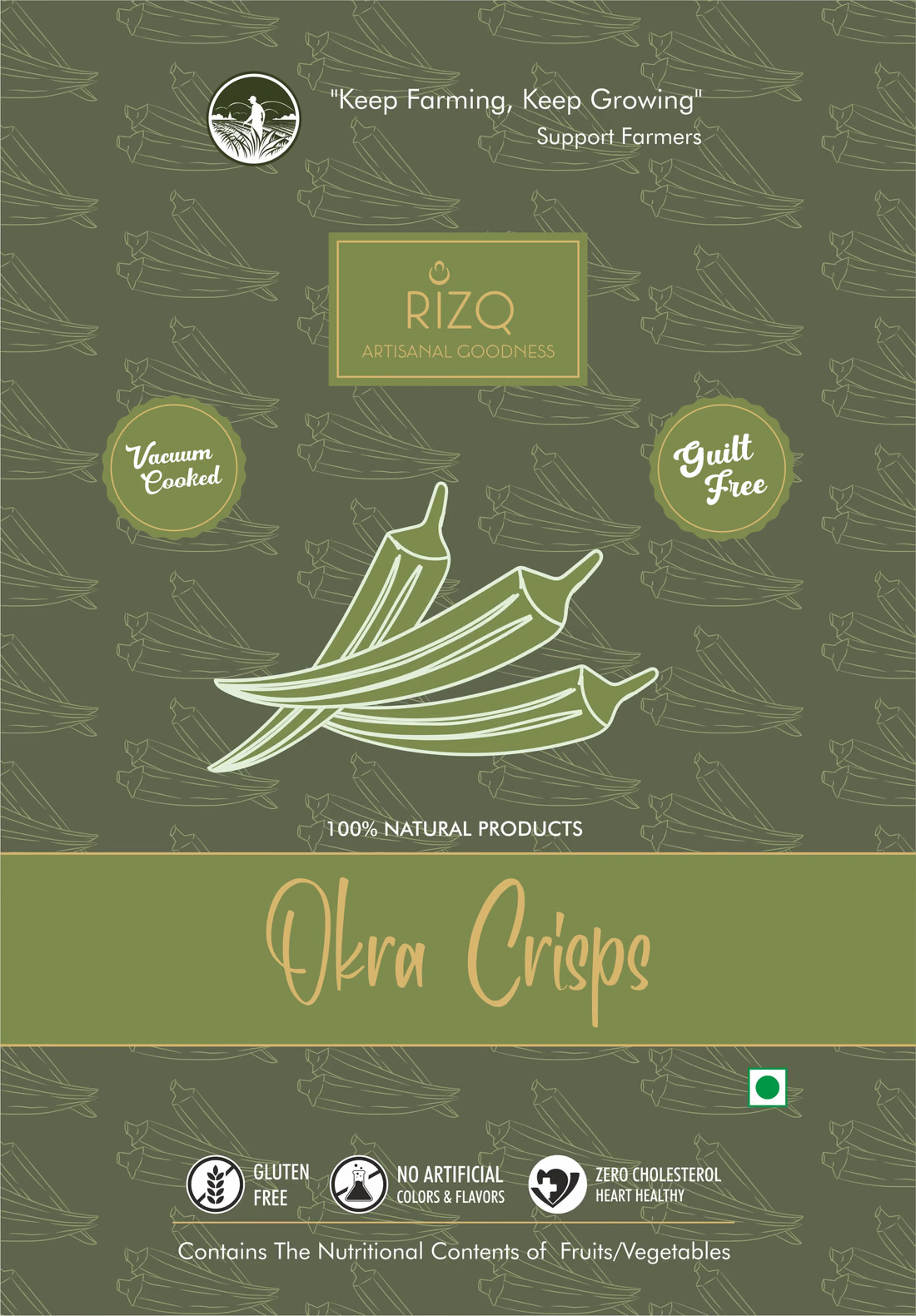
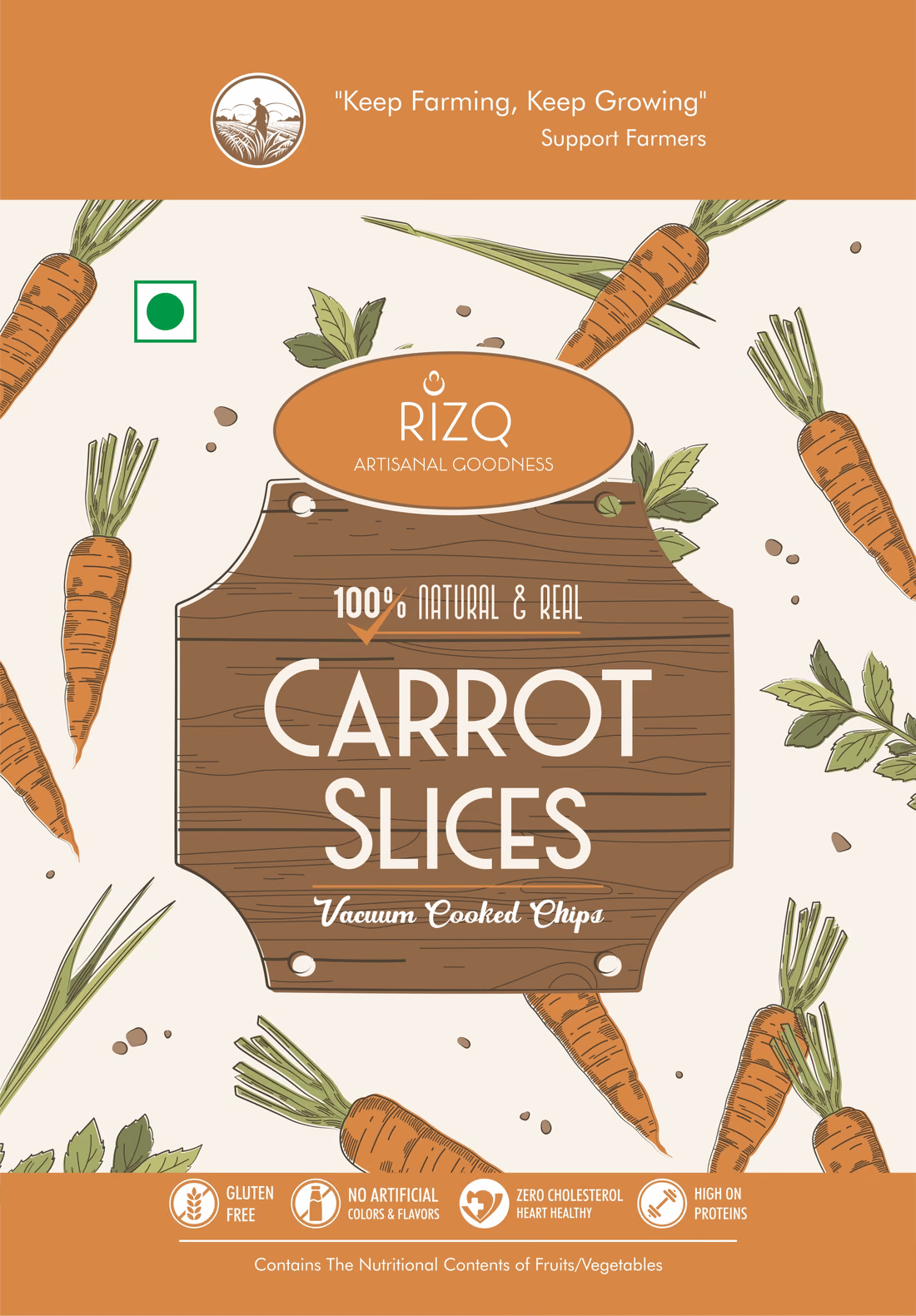
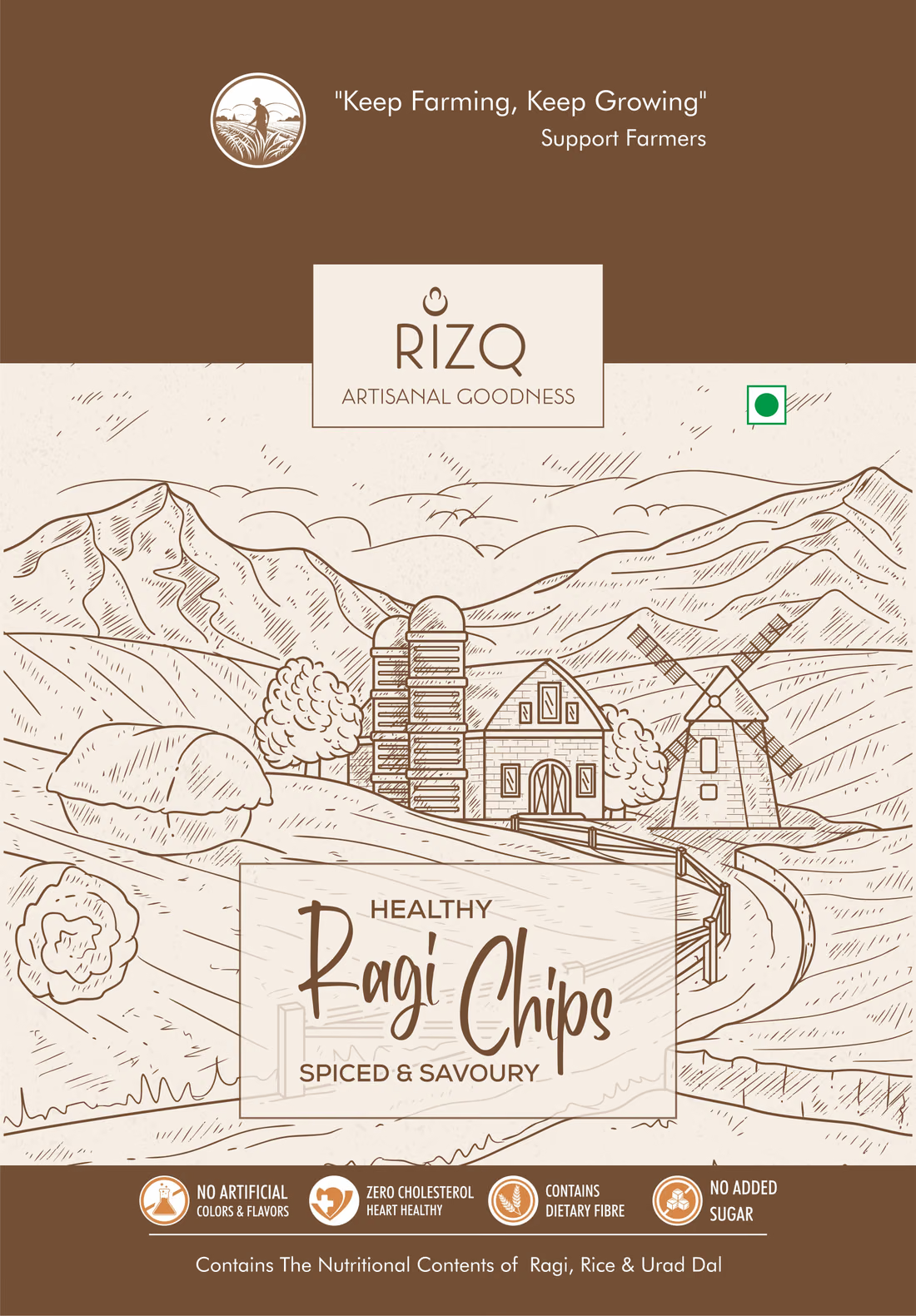
A range works when every pack shares a layout: the same place for the logo, the product name, the picture and the claims. Then only the colour and the picture change from product to product.
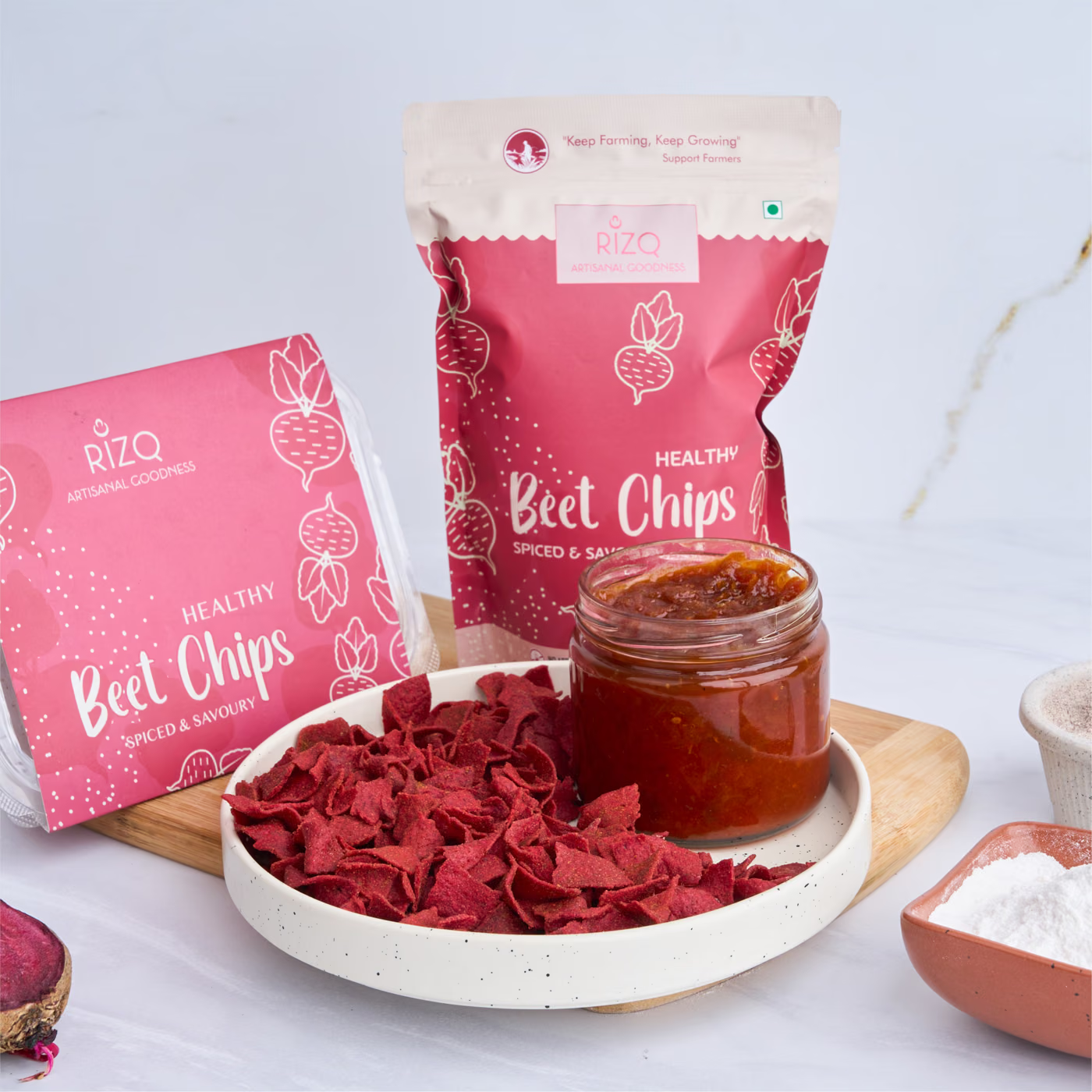
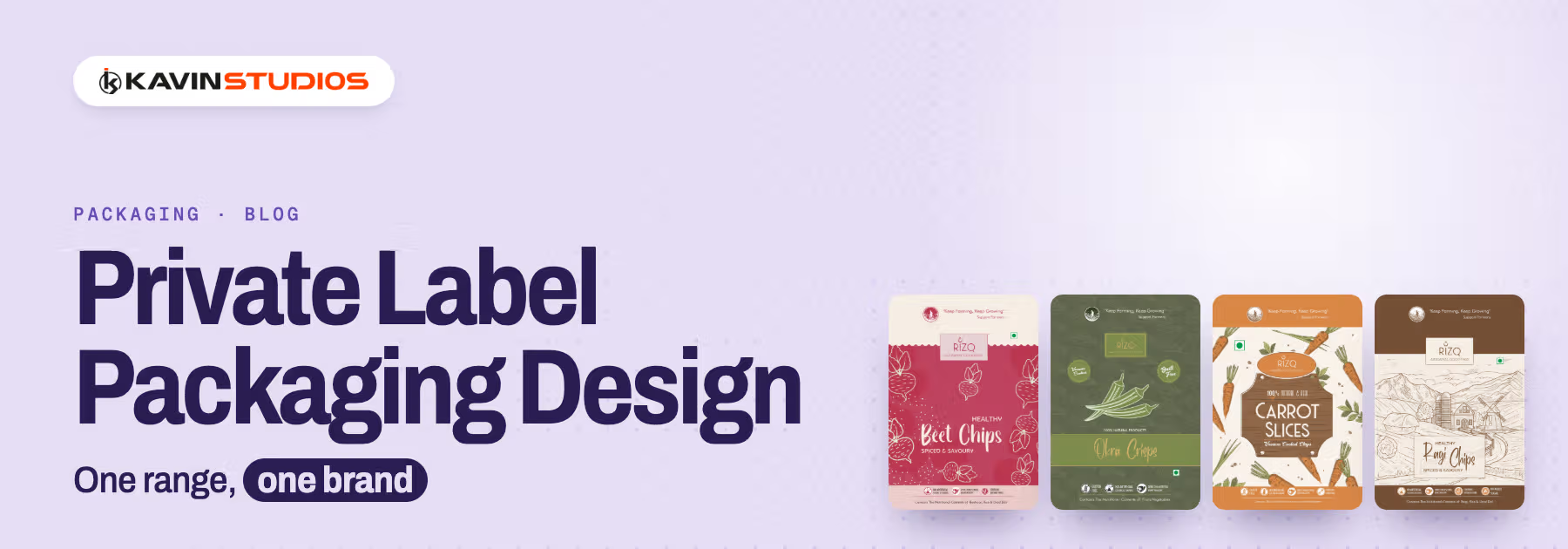
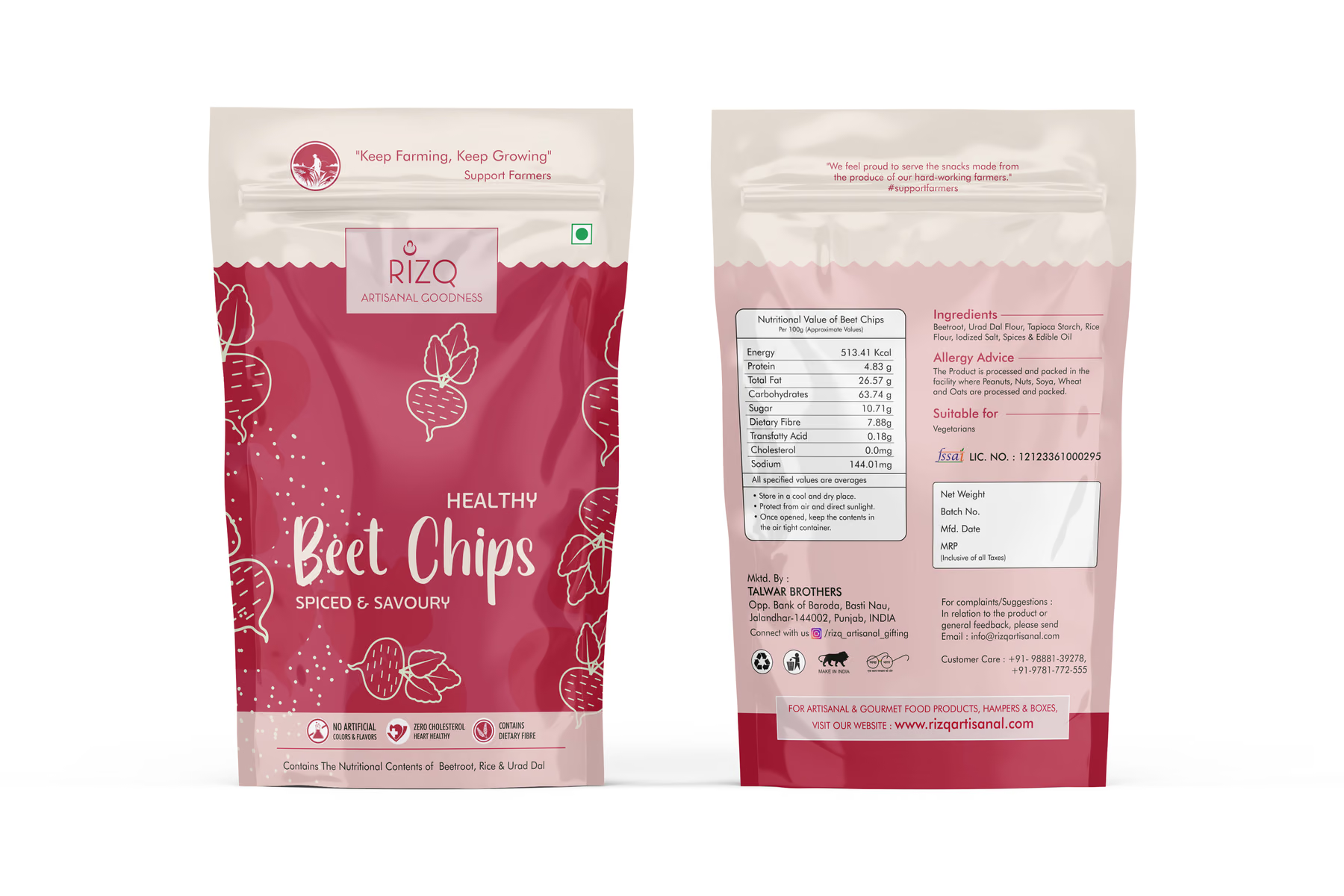
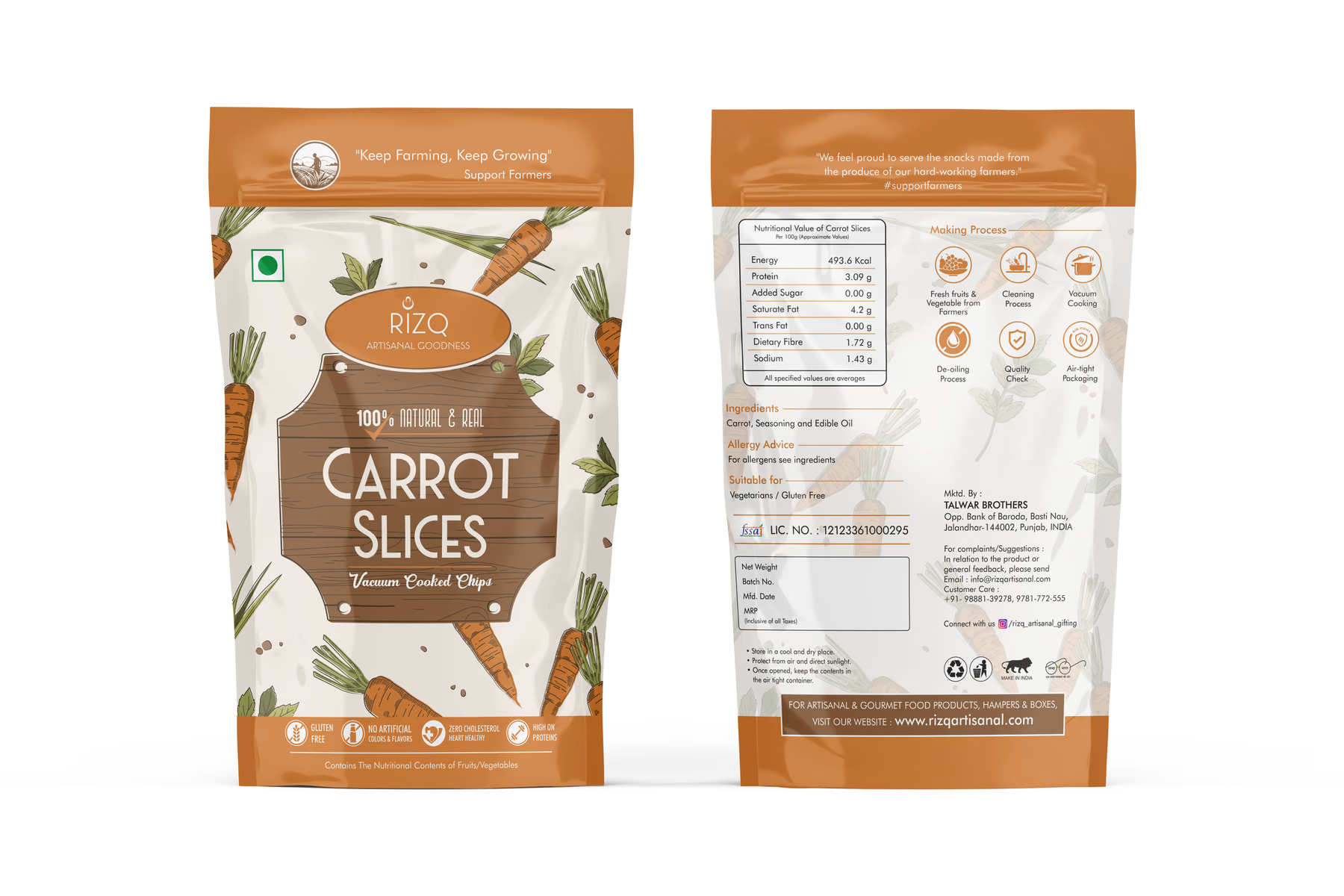
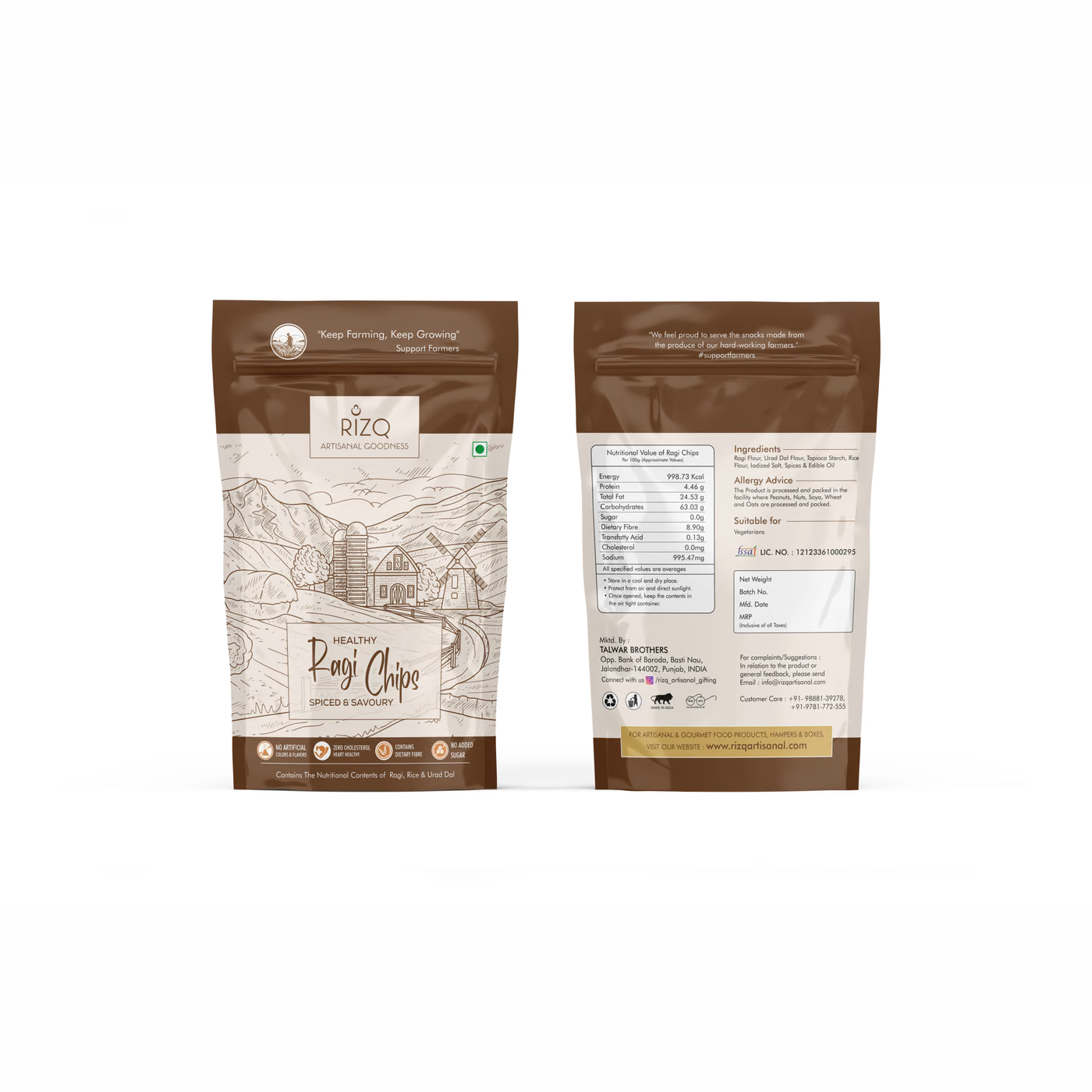
Our example is four snack pouches: Healthy Beet Chips, Okra Crisps, 100% Natural & Real Carrot Slices and Healthy Ragi Chips. The layout is the same on all four; each takes its colour and its plant from what is inside.
3. Say the same things in the same place
Put the product name, the variant and the weight where a customer expects them, and keep them there on every pack. The back follows the same rule: nutrition, ingredients and the maker's details in the same order on each product.
Food labels in India must carry certain details. Check the current FSSAI labelling rules, or ask your printer, before the artwork is final.
4. Leave room for the next product
A range grows. Pick colours that can be joined by more, and a layout that still works with a longer name or a different picture. A good test is to design a fifth product on paper before you print the first four: if it fits without changes to the system, the system is sound.
5. Check the material and the finish before the artwork is final
The same artwork looks different on a matte pouch, a glossy pouch or a paper label. Print or mock up the pack on the real material, and ask your printer for the sizes, the finishes and the print run that suit your range before you commit to the design.
6. Show the whole range together
A range sells as a range. Photograph the packs side by side, and put them side by side on your website and in your catalogue, so a customer sees the family and not one pack at a time.
Questions
What is private label packaging?
Packaging for a product that is made by one company and sold under another company's brand name. The brand owner designs the pack, so the design decides how the product looks next to other brands.
Should every product in a range have its own design?
No. Give every product the same layout and change the colour and the picture. Customers then see one brand, and a new product is quick to add.
How many products should I design first?
Design the system on the products you have, then test it on one more that you plan to add. If the fifth fits without changing the rules, you can print with confidence.
Written by

Kavin Studios
We build identities, packaging and digital experiences for ambitious businesses across India, the UAE, Australia and the United States. Kavin Studios is a brand of Kavin International.
Related