Jar Label Design: What the Label Has to Do
Five jobs a jar label has to do, shown on Rizq's glass jars of crunchy chickpeas and pineapple chips: the name, the quiet look, the lid, the material and the photograph.
PackagingKavin StudiosUpdated 22 October 2026
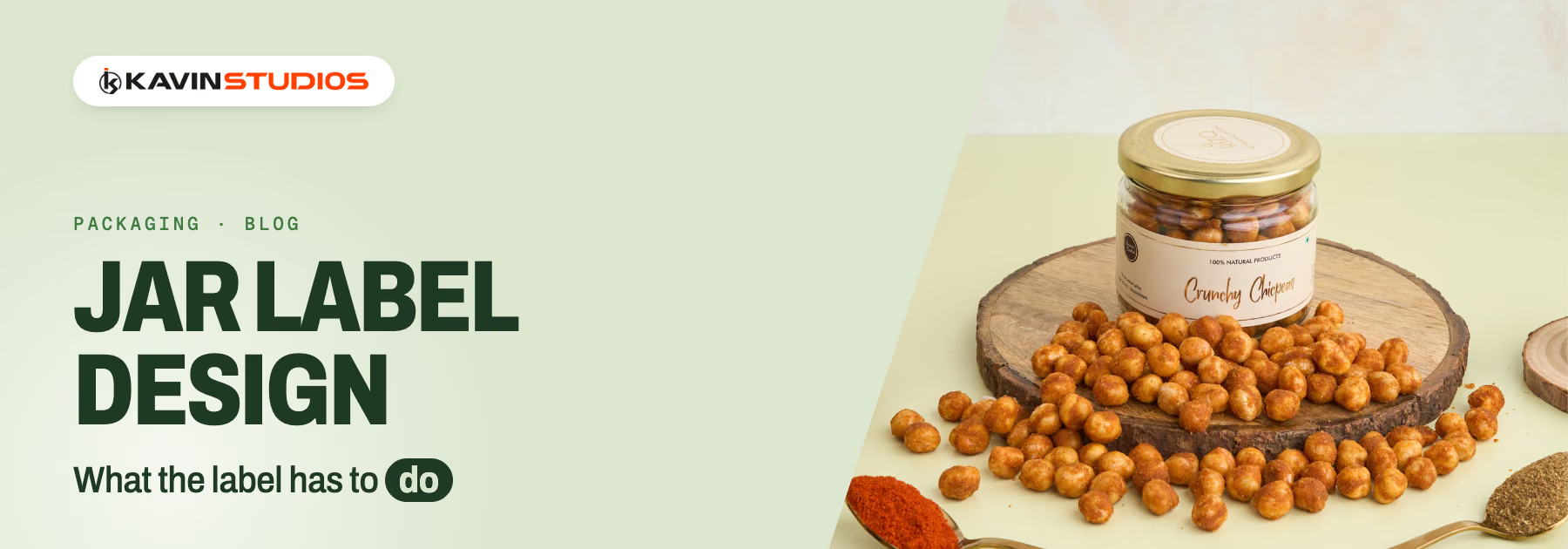
A jar label has one job above the others: to name the product at a glance while the food shows through the glass. Plan the name, a quiet background, the lid, the material and the product photograph together, and the jar sells itself on the shelf.
1. Let the name come first
On a glass jar the customer sees the food first and the label second. So the label's first job is to say what is inside, in a name large enough to read from an arm's length.
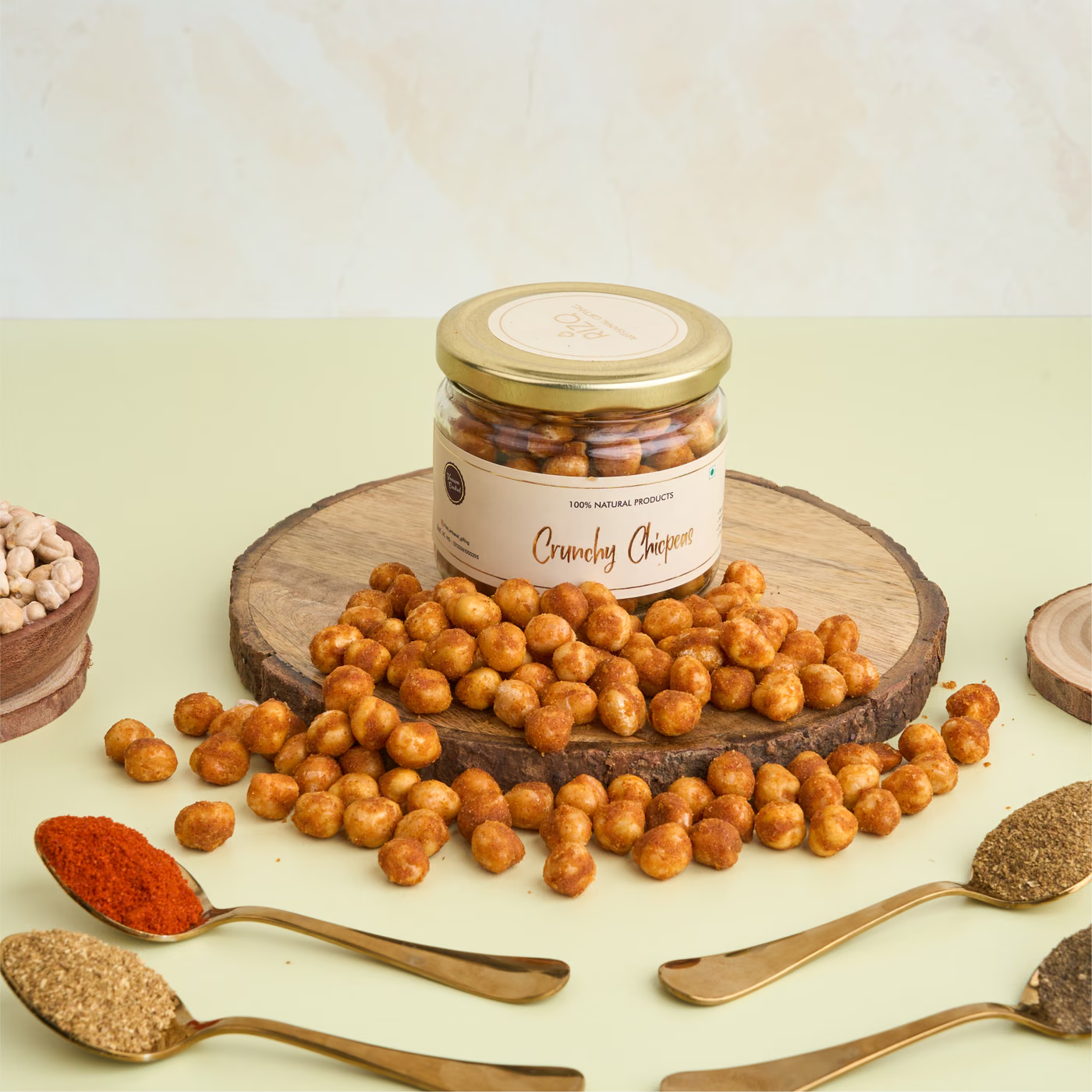
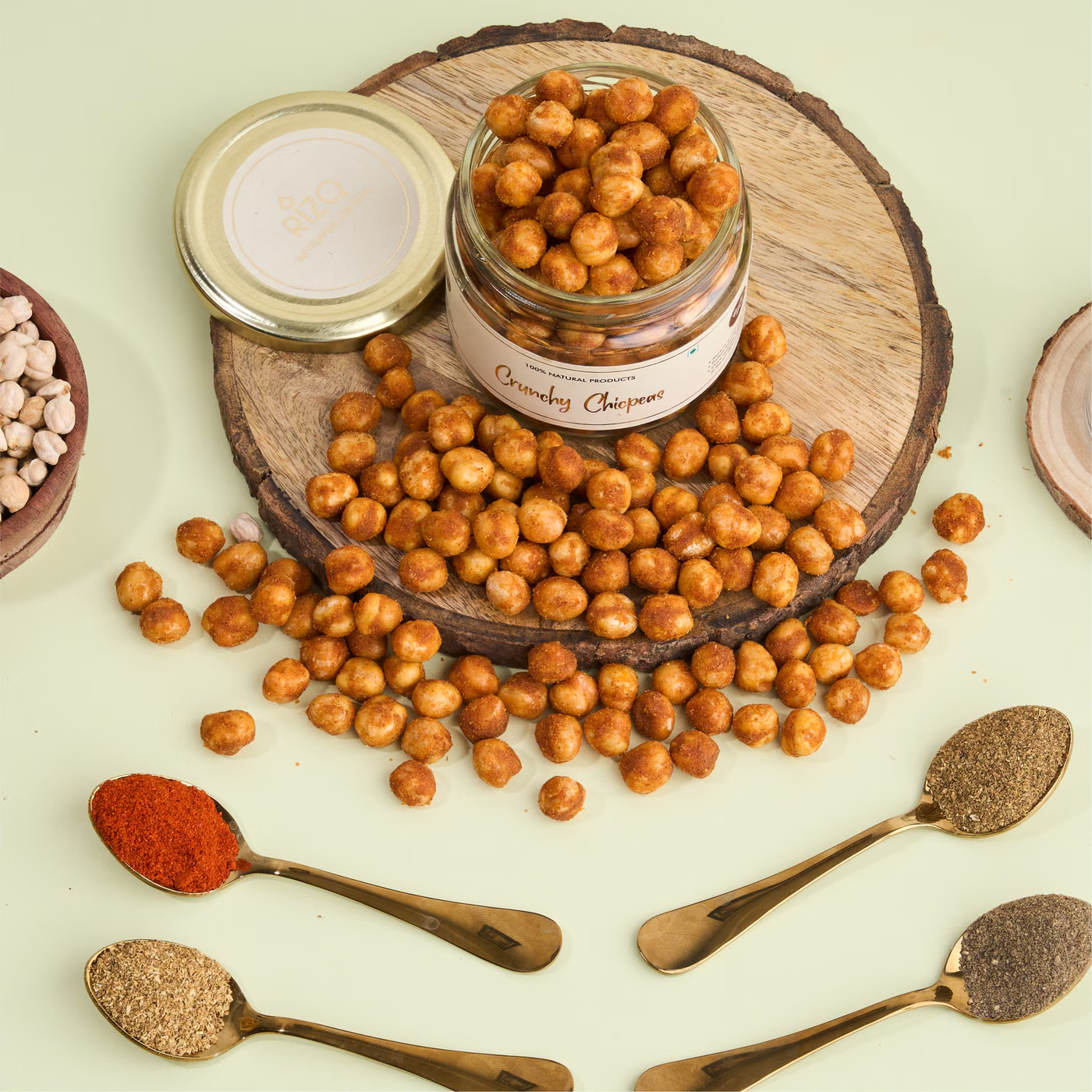
On Rizq's jars the label carries the product name, Crunchy Chickpeas or Pineapple Chip, on a cream label with a small line above it.

2. Keep the label quiet, let the food be the colour
Through clear glass, the food is the brightest thing on the jar. A calm label in one soft colour lets the chickpeas and the pineapple carry the colour, instead of competing with them.
3. Think of the lid and the label together
The lid is the first thing seen from above and the last thing touched. A gold lid with a plain seal sits well with a cream label: the two read as one pack. Decide them together, not one after the other.
4. Choose the label material and size before the artwork
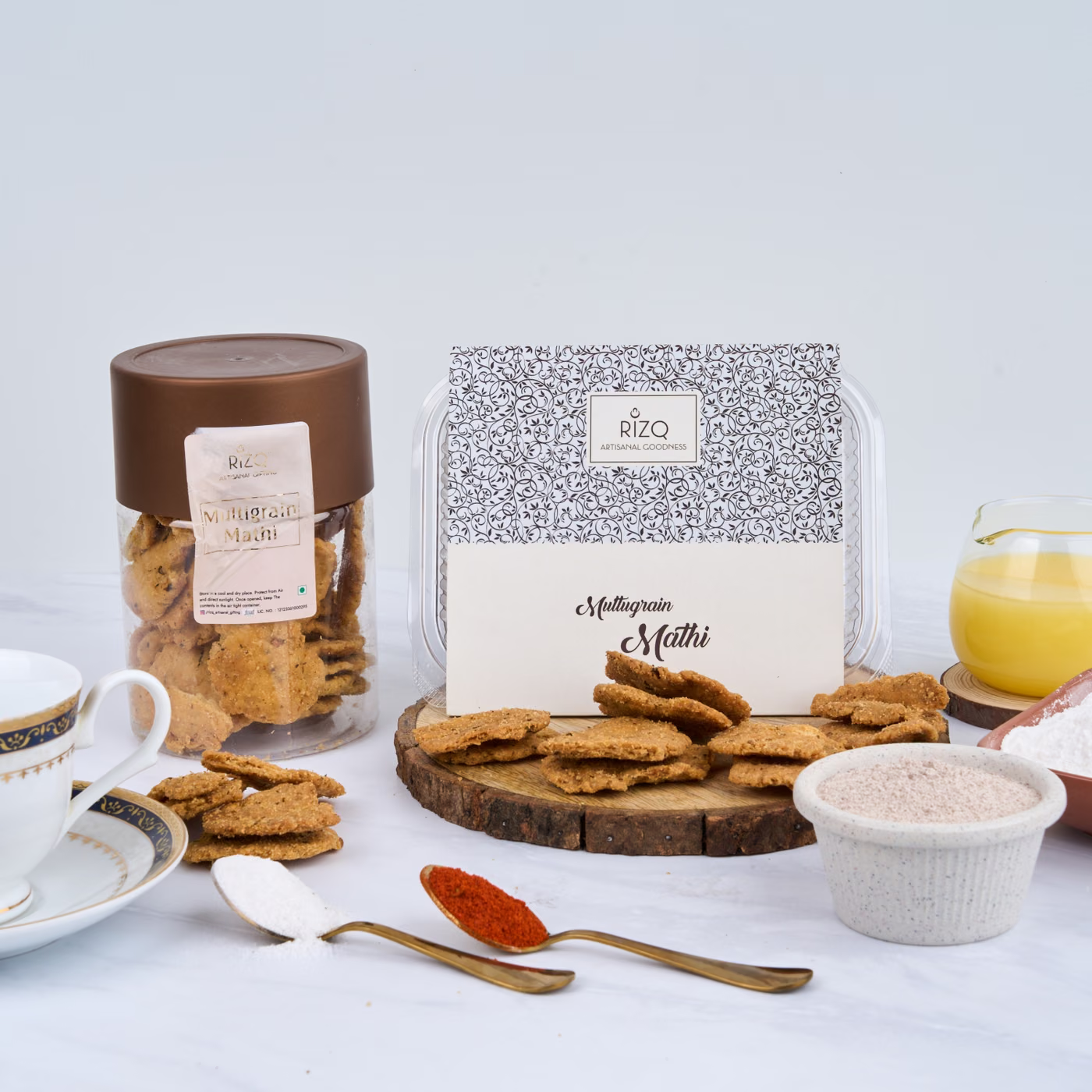
A label that wraps the jar gives you room for the details; a front label keeps the glass clear. Paper looks natural and soft, while a clear film lets the food show through the label itself. Ask your printer for the size that fits your jar, and test a printed label on the real jar before you print the run.
Food labels in India must carry certain details. Check the current FSSAI labelling rules, or ask your printer, before the artwork is final.
5. Photograph the jar with its food beside it
A photograph of the jar with the food heaped around it tells the customer what is inside and how it will look in the bowl. Rizq's jars are shot on a wooden board with the chickpeas, the pineapple and the spices around them.
Questions
Should a jar label wrap around the jar or sit on the front?
A wrap-around label gives more room for the details; a front label keeps the glass clear so the food shows. Pick by how much you need to print and how much of the food you want seen.
What should the label say first?
The product name, large enough to read at a glance, then a short line about what it is. Put the nutrition, the ingredients and the maker's details where they fit, on the side or the back.
Do I need to test the label on the jar?
Yes. Print one label and put it on a real jar before the full run, to check the size, the fit around the curve and how the colours look on glass.
Written by

Kavin Studios
We build identities, packaging and digital experiences for ambitious businesses across India, the UAE, Australia and the United States. Kavin Studios is a brand of Kavin International.
Related